Sort by
Start: Jun 13, 2026
End: Jun 29, 2026
Departure: Paris
Arrival: Reykjavik
Duration: 17 Days
Show Prices
From$47,167$40,092

To sail to the lands beyond the Arctic Circle is to push the boundaries of exploration in the wake of those who made discovering the polar regions their life’s mission. You will set a course towards the south of Svalbard and its untouched landscapes, before reaching the north-east of Greenland, inaccessible to traditional ships in early summer. On your journey, the Ammassalik, Blosseville and Ittoqqortoormiit regions reveal mythical places associated with the history of the discovery of the Arctic – places where the names Paul-Emile Victor, Jules de Blosseville and Jean-Baptiste Charcot still resound.
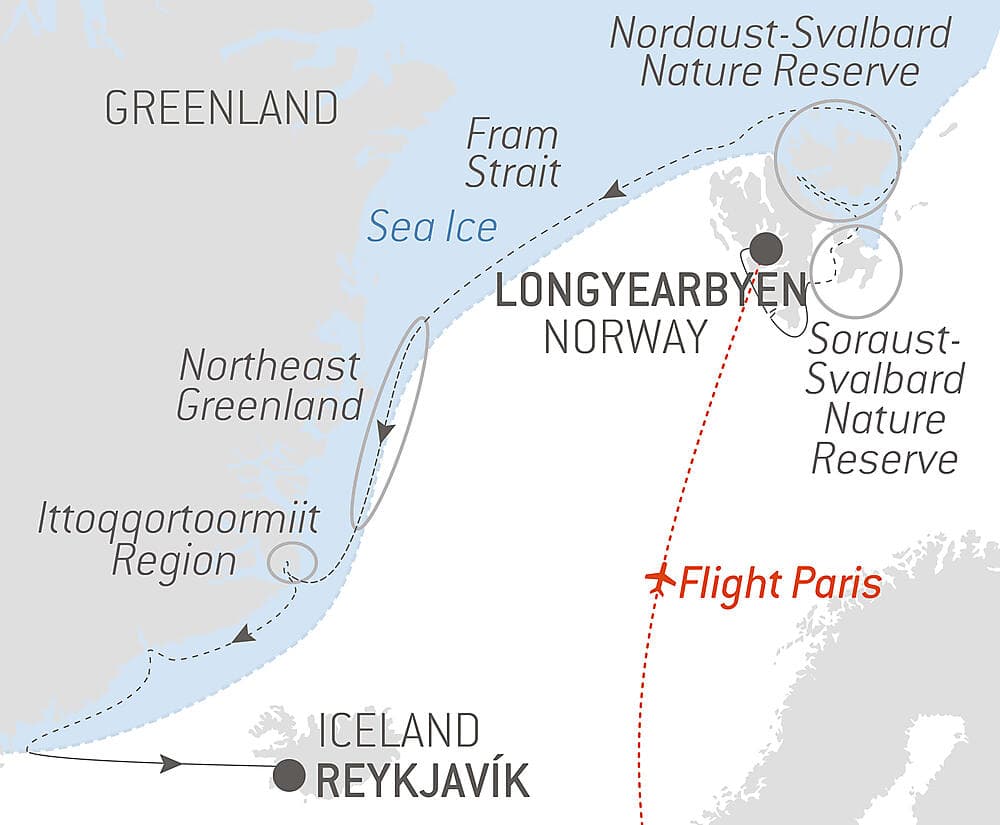
Please note: This itinerary is meant to serve as a general guide. Plans may change along the way, depending on weather, sea conditions, or choices made by the Expedition Leader and team to give you the safest and most rewarding experience.
Flight Paris/Longyearbyen.
Approximate flight duration: 4 h 30.
We highly recommend you arrive in Paris the day before this flight.
We suggest you to be at the check-in counter 2 hours before departure.
Meet & greet at the airport by a local English-speaking representative.
Transfer to the pier for embarkation.
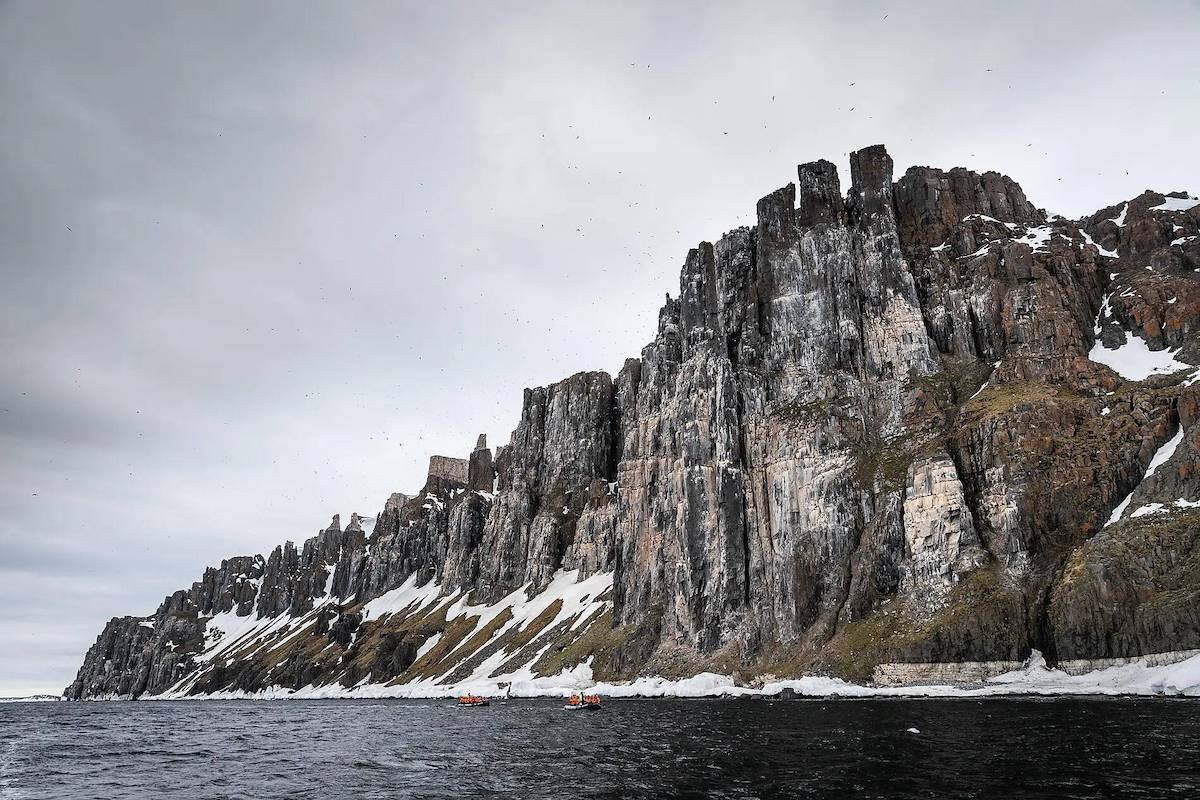
Set sail for southwest Spitsbergen, immerse yourself in this environment unlike any other and explore its unexpected riches. In this natural sanctuary, the polar light combines with the changing weather of the Arctic, a big blue sky, the horizon scattered with clouds, the enveloping mist erasing the border between the land and the sea. Follow in the footsteps of the first explorers and admire the majestic fjords and glaciers sculpting the breathtaking landscapes, their icy waters shimmering beneath the midnight sun. The fjords, veritable cathedrals of ice, reveal their millennial secrets, while the glaciers, like sleeping giants, move slowly towards the sea, setting free sparkling icebergs. On the water, you might spot belugas and rorquals, while on the shores, seals and Arctic foxes add a touch of mystery to this living tableau, where the steep cliffs become breeding grounds for thousands of seabirds, like guillemots. Southwest Spitsbergen is an ode to nature in its rawest and purest form.
The Søraust-Svalbard Nature Reserve is the second largest protected area in Norway. Established in 1973, this nature conservation area stretching over more than 21,000 km2 will offer you stunning panoramas including coastal landscapes, rocky islets, mountain plateaux, vast tundra plains, and ice floes. With a little luck, you will be able to observe a wide variety of seabirds, given the site is listed as an Important Bird Area, as well as cetaceans, Svalbard reindeer, or even Arctic foxes. Among other things, Edgeoya Island is renowned for providing shelter to a number of polar bears during the breeding season.
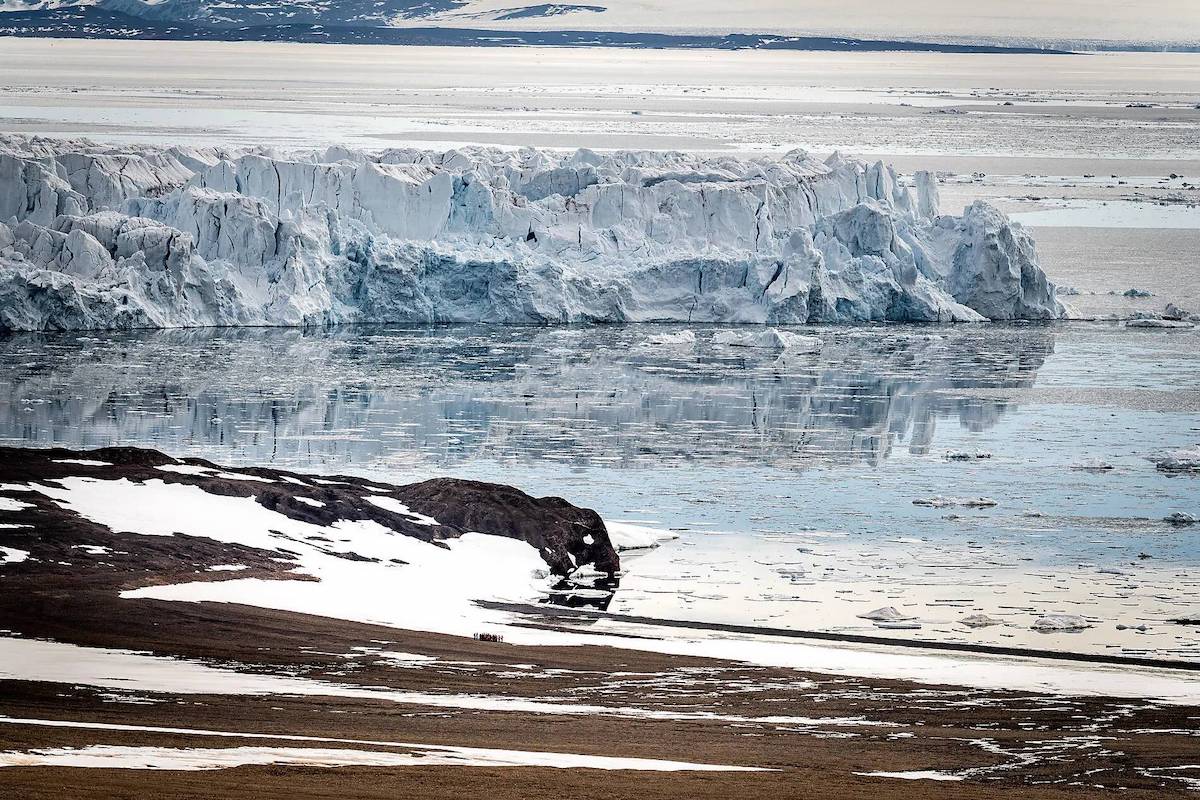
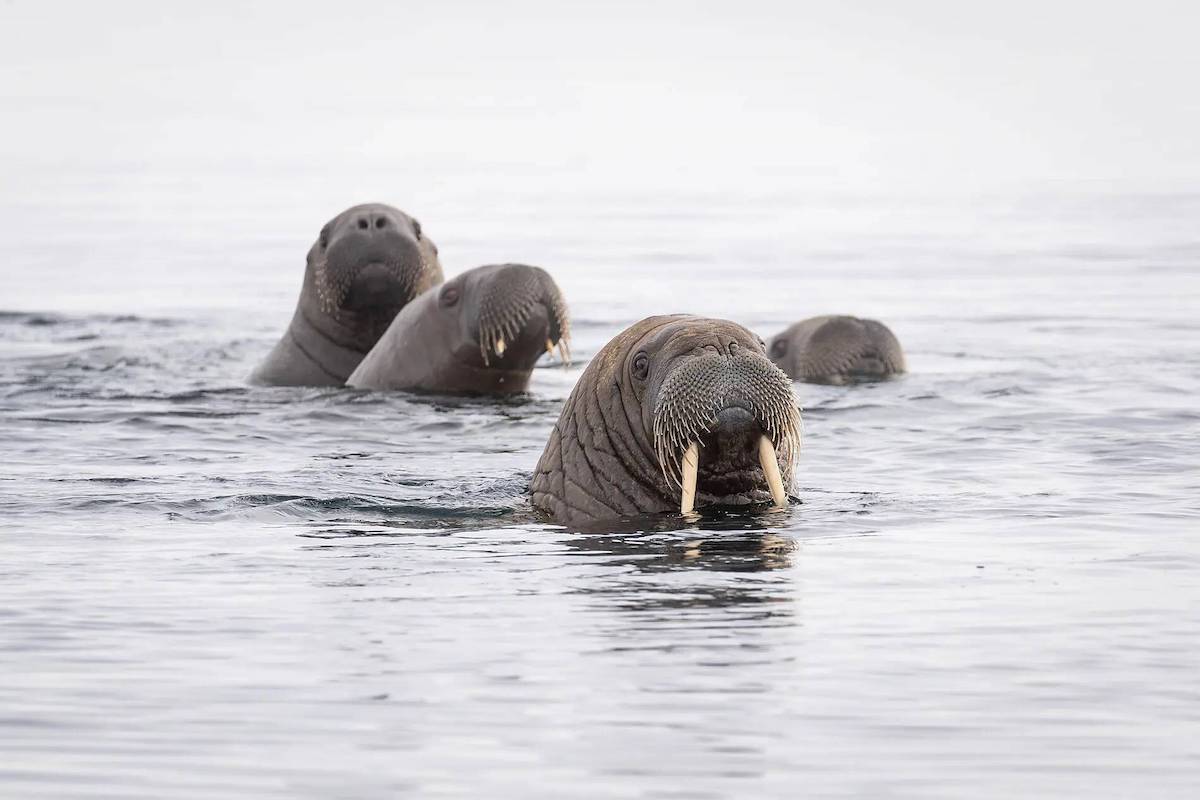
Sailing in the Hinlopen Strait, in the heart of the Arctic Ocean, between the Norwegian islands of Spitsbergen and Nordaustlandet promises an unforgettable experience. This territory of the Nordaust-Svalbard Nature Reserve offers breathtaking panoramas, with magnificent basalt formations and the ice cap stretching as far as the eye can see, diving into the sea. The shore line cut by the fjords moving inland composes a magical landscape in which icebergs float here and there, the result of the calving of the surrounding glaciers. This place, today a popular spot to observe the seabirds nesting in the enormous cliffs, polar bears and walruses, was once intrinsically linked to the history of the whalers who frequented the region from the 17th century. Indeed, it was one of them, Thijmen Jacobsz Hinlopen, then director of a Dutch whaling company, who gave the strait its name. Later on, Russian trappers, European explorers, scientists and even mountaineers roamed this region, as hostile as it is sublime.
The Nordaust-Svalbard Nature Reserve has been protecting the northernmost and coldest part of the archipelago, Nordaustlandet (North East Land), since 1973. This vast polar desert covered by two ice caps is the second largest island in the Svalbard archipelago. Protected by the Gulf Stream, the fjords and cliffs in the west and north are home to large colonies of birds and walruses. The landscapes in the colder east and south are dominated by imposing glaciers that calve majestic icebergs in the vast Hinlopen Strait. Large colonies of thick-billed murres have taken up residence on the sheer cliffs*. You may even get the chance to see a bear or an Arctic fox roaming in the vicinity.
*depending on nesting and migration period
Take advantage of the on-board lectures and opportunities for discussion with specialists to learn more about the poles. Participate in furthering scientific research and let us discover together what these fascinating destinations have yet to reveal to us.
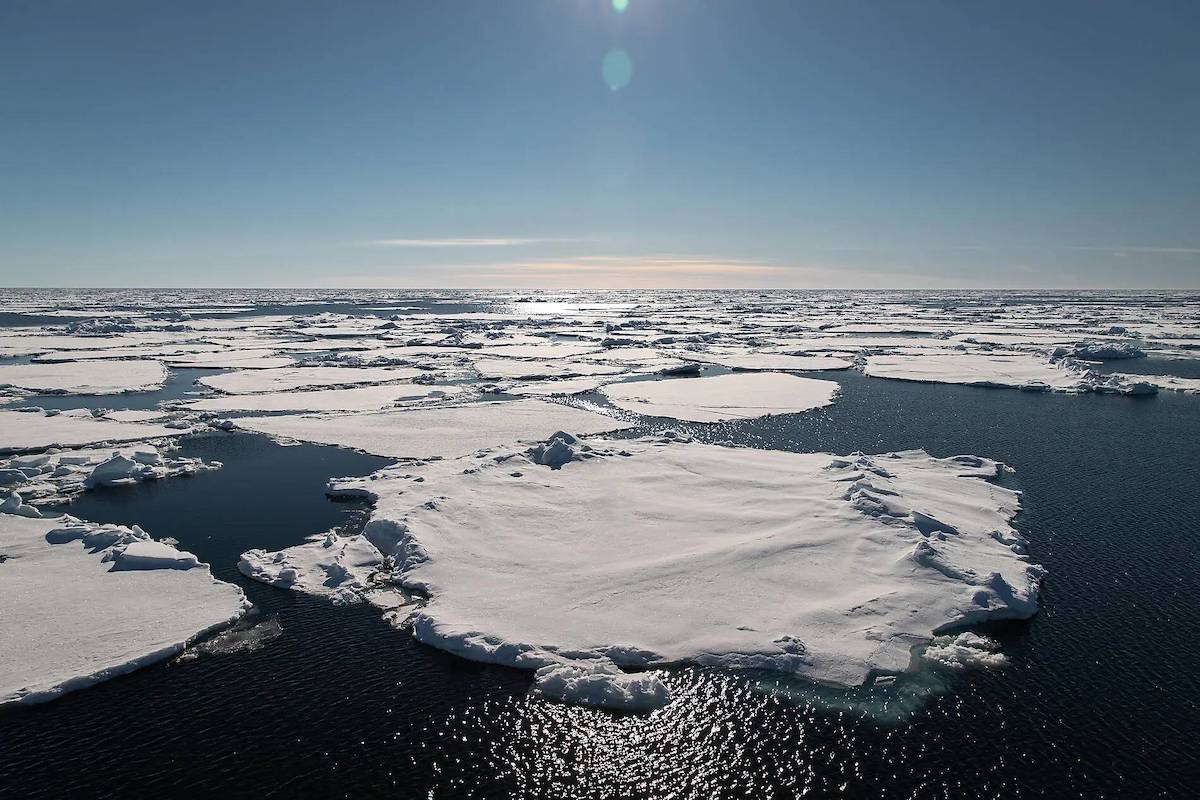
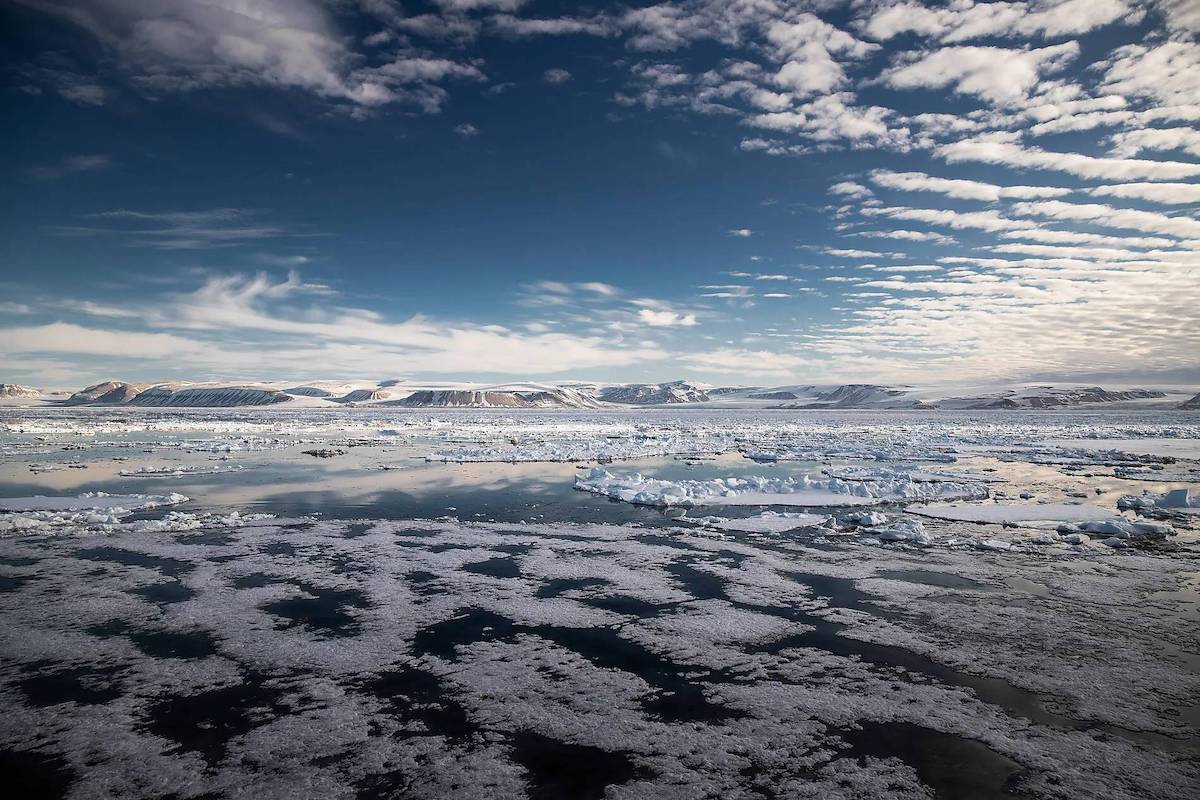
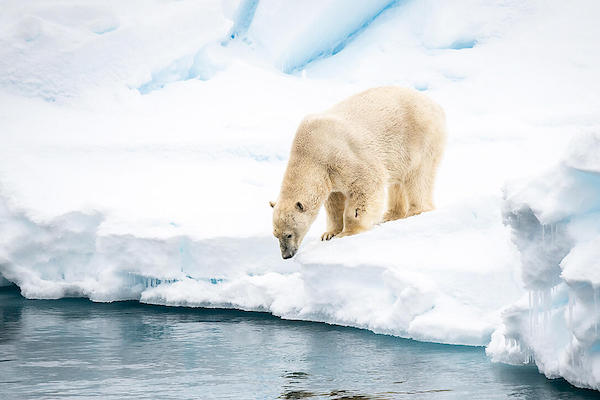
Set sail for North-East Greenland to immerse yourself further and up higher in the Arctic region to explore the unexpected riches of the sea ice, where traditional ships cannot travel at this time of the year. As the light shifts and the moods of the sky change, the different states of the ice and the infinite diversity of its textures create an exceptionally stunning tableau. With patience and humility, you will sail amid the pearl-white floating cathedrals and the ice carried by the Transpolar Drift. En route, icebergs have their journey halted by ice and pressure ridges reveal their sharp edges. In the midst of this icy vastness, beauty is found in the detail and the magic of the moment. In the realm of polar bears, you may even get the chance to admire the moving sight of a mother and her cub travelling across the immaculate icy expanse.
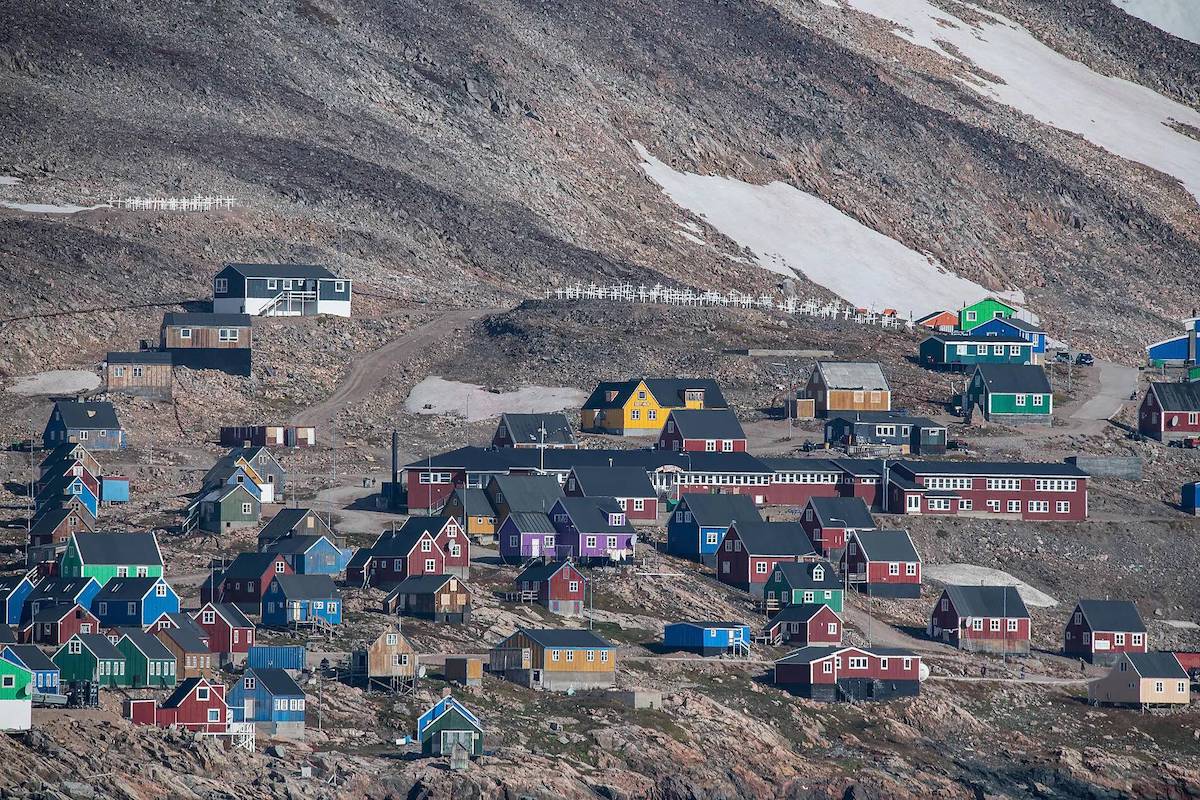
On the East coast of Greenland, in the Ittoqqortoormiit region, you will have the rare opportunity of immersing yourself in the heart of isolated scenery and exploring the beauty of its landscapes. The high alpine mountains stand out in the sky, revealing dark rock edges. The region is home to the longest fjord system in the world, Scoresby Sound. On the edge of the fjord, the eponymous village is considered one of the most remote inhabited places in the world. The colourful houses, so typical of Greenland, dot the landscape with small red, yellow and blue patches that stand out against the surrounding arid landscape. Immersing yourself in this region will allow you to discover the ancestral way of life of the last hunters of the polar region. This will be a veritable deep-dive into the lives of the Arctic’s inhabitants.
Aboard your ship, follow in the footsteps of Jules Poret de Blosseville, a French explorer and sailor. In 1833, aboard La Lilloise, he set off to discover this isolated and unexplored part of eastern Greenland and gave French names to various sites on the coast. The adventure probably has an unfortunate outcome, since the crew was never found. This uninhabited territory, which now bears his name, lies to the south of Scoresby Sund. Surrounded by ice, icebergs and pieces of pack ice, Blosseville Coast is one of these wild and hard-to-reach places that very few people are lucky enough to explore.
Still almost unknown just a century ago, the east coast of Greenland remains the most authentic and majestic region. Here, the alpine mountains merge intimately with the sea, while the fjords are adorned with high snow-capped peaks and drifting icebergs. Follow in the wake of Captain Jean-Baptiste Charcot’s famous ship, the Pourquoi Pas?, which set off with its crew to discover Ammassalik, a small island of primitive and wild beauty where the Inuit people chose to live. The name of this island is a reference to the capelin, a small flamboyant silver coloured fish, whose presence in the thousands announces to inhabitants the return of spring. A surprising discovery in a spectacular setting.
Lying between Greenland and Iceland, the Denmark Strait was crossed for the first time by theVikings in the late 10th century, during Erik the Red’s expeditions. In the Second World War, its waters were the theatre of a battle between the Kriegsmarine and the Royal Navy, on 24 May 1941. In the wintertime, extremely dense pack ice forms along the Greenlandic coasts and, while the Transpolar Drift sweeps icebergs along throughout the year, the strait is generally clear of ice during the summer. In the depths of the strait lies the world’s largest waterfall, an undersea cataract formed by the difference in temperature between the cold waters of the Greenland Sea and the warmer waters of the Irminger Sea. Numerous cetacean species thrive in this rich ecosystem.
Iceland’s capital stretches along the edge of a vast bay in the west of the country. Perlan, the “Pearl of Reykjavík”, a museum located on ’Oskjuhlið hill, offers a panoramic view of the lush, green landscapes. A little further, one can easily spot the signpost showing the way to the evangelical Hallgrímskirkja church, and to the historical centre where one can stroll along the Skólavördustígur and the Laugavegur, two lively streets with charming small shops. For some relaxation just outside of the city, visitors have the opportunity to visit the Reykjanes peninsula and its famous thermal lagoons of the Blue Lagoon.
Inclusions
²Excluding premium à la carte beverages.
Exclusions
Sort by
Start: Jun 13, 2026
End: Jun 29, 2026
Departure: Paris
Arrival: Reykjavik
Duration: 17 Days