Sort by
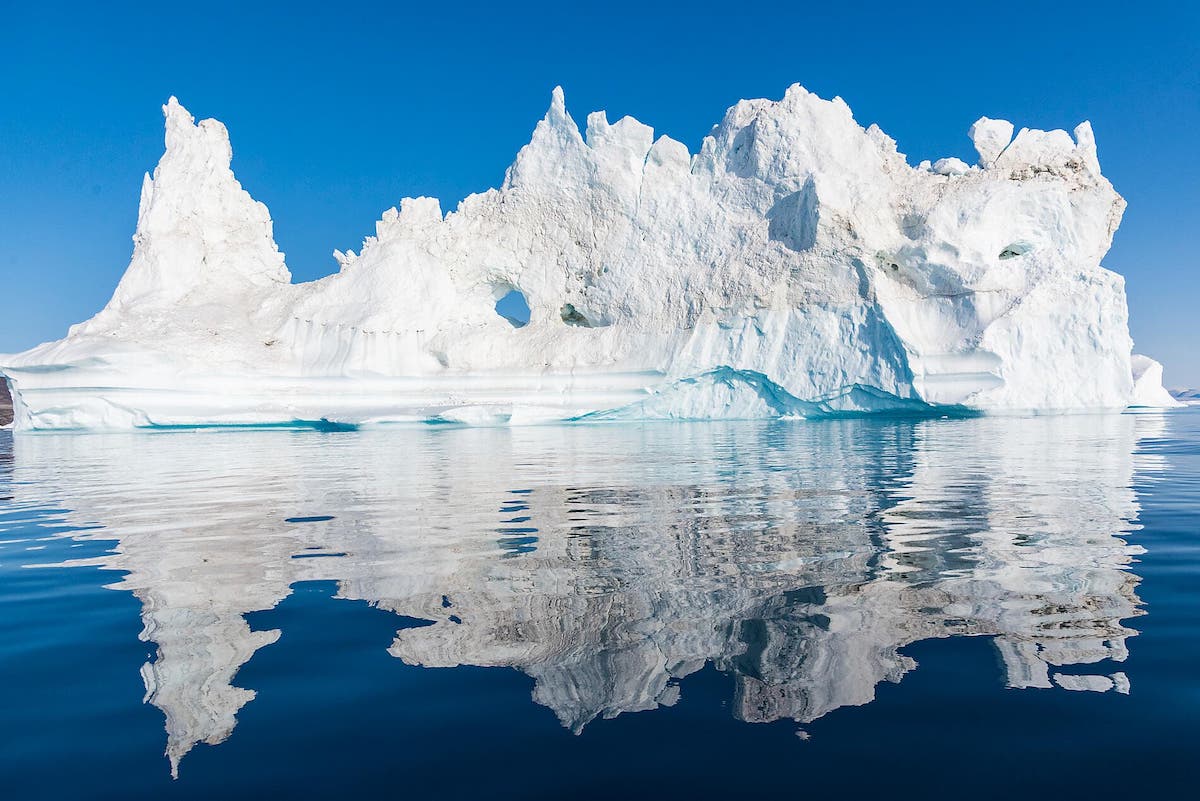
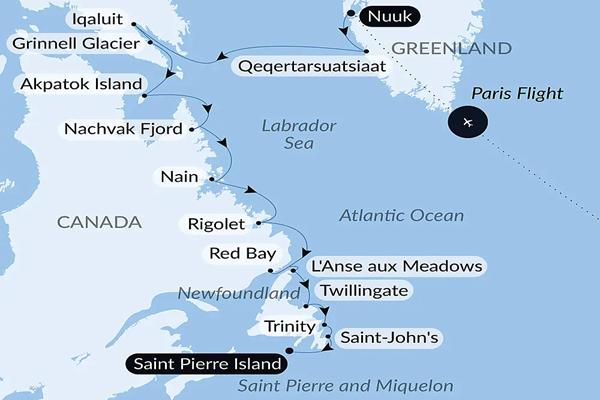
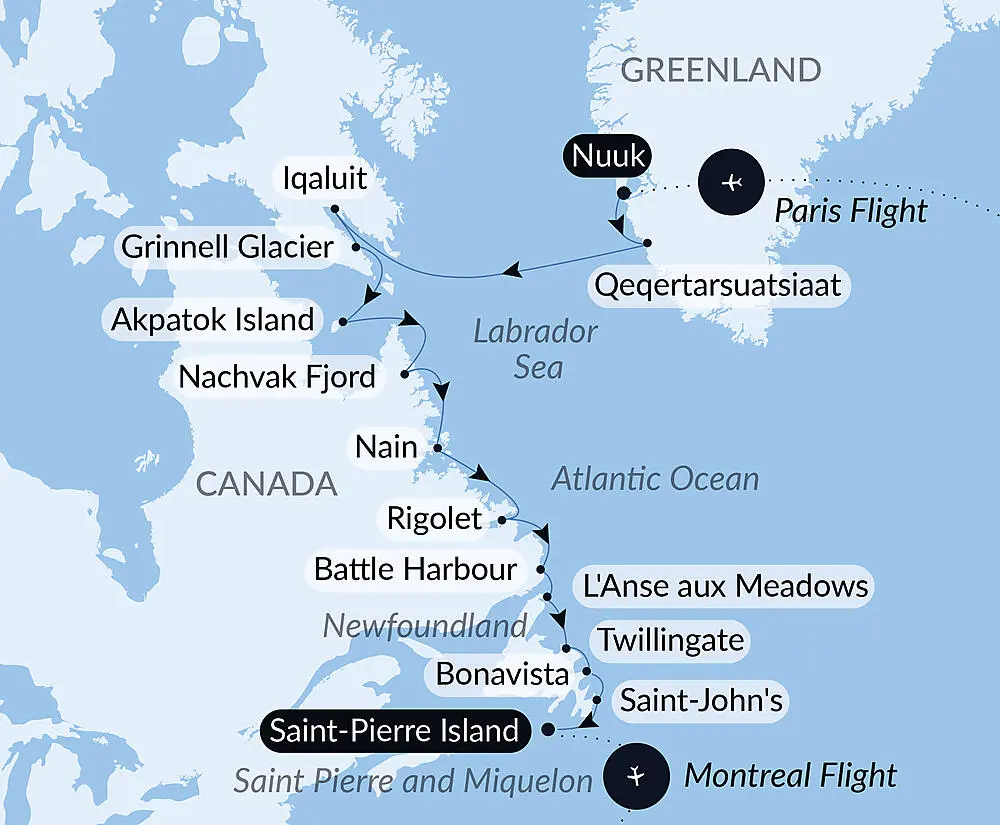
See the infinity of the polar expanses unfurl its grandeur during an cruise taking you from Greenland to the Nunavut to reach the coastlines of Labrador and the sumptuous island of Newfoundland. Encounters with local people, the exciting history of the Arctic territories and many unforgettable hikes will mark this journey.
We suggest you to be at the check-in counter 2 hours before departure.
We highly recommend you arrive in Paris the day before this flight.
When Erik Le Rouge, the exiled Norse chief, landed on the coast of Nuuk, he found a fertile and welcoming land dotted with fjords. He settled there with a group of his former countrymen, and the Norse remained the principal inhabitants until, over a period of 500 years, their population declined and gave way to the Inuit. Nuuk is situated at the mouth of one of the largest networks of fjords in the world, where the waters never freeze. The town spreads gently out towards the Davis Strait and enjoys an historic center that is particularly rich in national heritage. The vivid reds, blues, greens and yellows of the houses are a lively contrast to the somber waters of Greenland and serve to lift the spirits of the locals during the Winter months.
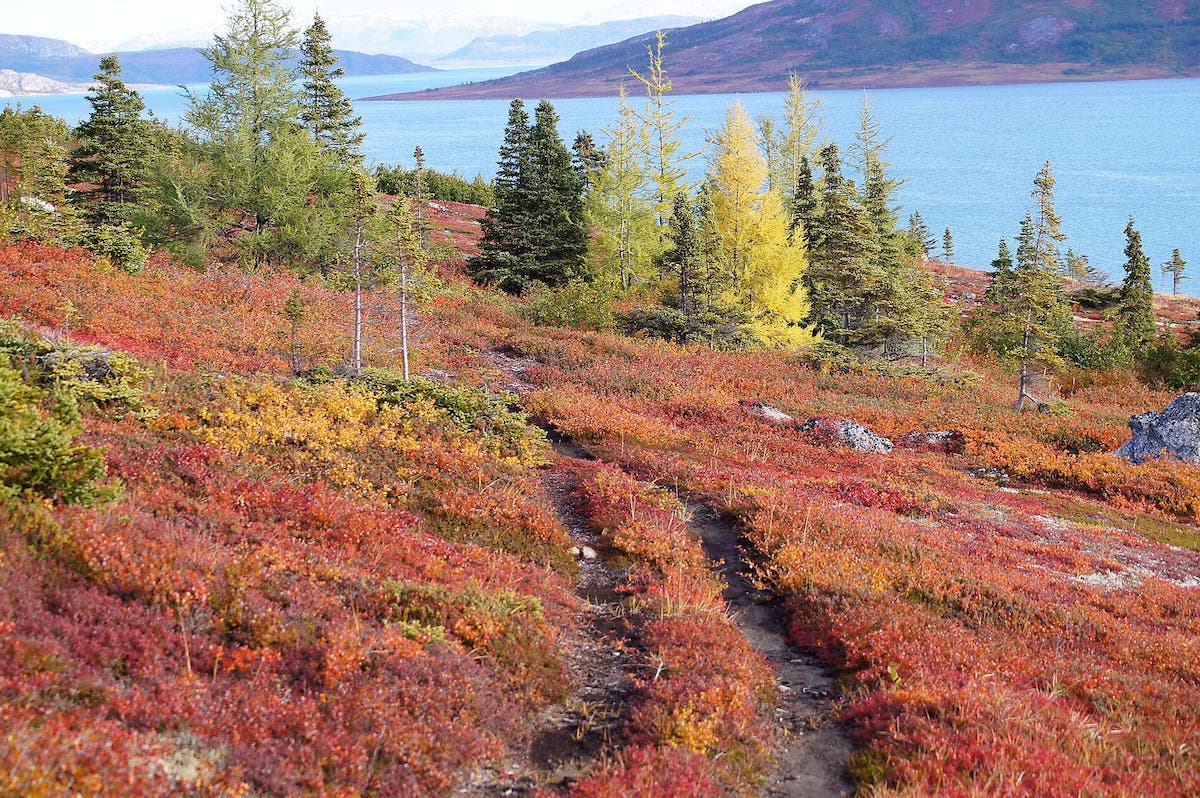
Located on the southwestern coast of Greenland, Qeqertarsuatsiaat offers an authentic immersion into the country’s nature and traditional way of life. Surrounded by icy fjords and granite mountains, this village is a gateway to explore preserved polar landscapes and to magnificent hikes through the tundra, glacier lakes and rocky hills. Its tranquillity makes it a special site that has attracted the region’s emblematic fauna, which you will perhaps be lucky enough to observe: whales, seals and seabirds. The inhabitants still follow the pace of nature, organising their day-to-day lives around fishing, hunting and gathering, fully demonstrating human resilience in the Arctic.
During your journey at sea, make the most of the many services and activities on board. Treat yourself to a moment of relaxation in the spa or stay in shape in the fitness centre. Depending on the season, let yourself be tempted by the swimming pool or a spot of sunbathing. This journey without a port of call will also be an opportunity to enjoy the conferences or shows proposed on board, depending on the activities offered, or to do some shopping in the boutique or to meet the photographers in their dedicated space. As for lovers of the open sea, they will be able to visit the ship’s upper deck to admire the spectacle of the waves and perhaps be lucky enough to observe marine species. A truly enchanted interlude, combining comfort, rest and entertainment.
Known as Frobisher Bay in the past, before being named Iqaluit in 1987, the capital of Nunavut is the smallest Canadian capital, with 7,000 inhabitants. It is a gateway to the secret, mysterious and wild Arctic, expressing this world of silence, a majestic territory. Strongly rooted in its unique Inuit culture, it holds memories of a millennia-old presence of pre-Dorset, Dorset and Thule cultures. Discoveries indicate that it was a fishing and camping site, called qaluit (“place of fish”) at the time. You’ll appreciate its large ice-covered and isolated spaces steeped in Inuit culture and imbued with a unique “Far North” atmosphere.
To the south of Baffin Island, at the entrance to the fjord leading to Iqaluit, the capital of Nunavut, lies the Grinnell Glacier. Iqaluit’s name is derived from the Inuktitut language; it means “place of many fish”, as the waters of the fjord are teeming with Arctic char. The glacier, which is approximately 800 metres (2,625 feet) high, is named after Henry Grinnell, an American philanthropist who funded several polar expeditions in the 19th century. Weather permitting, you will have the privilege of admiring the glacier front from the sea during an outing in an inflatable dinghy, before landing to walk up the valley running along the glacier, in a rocky landscape with tundra vegetation.
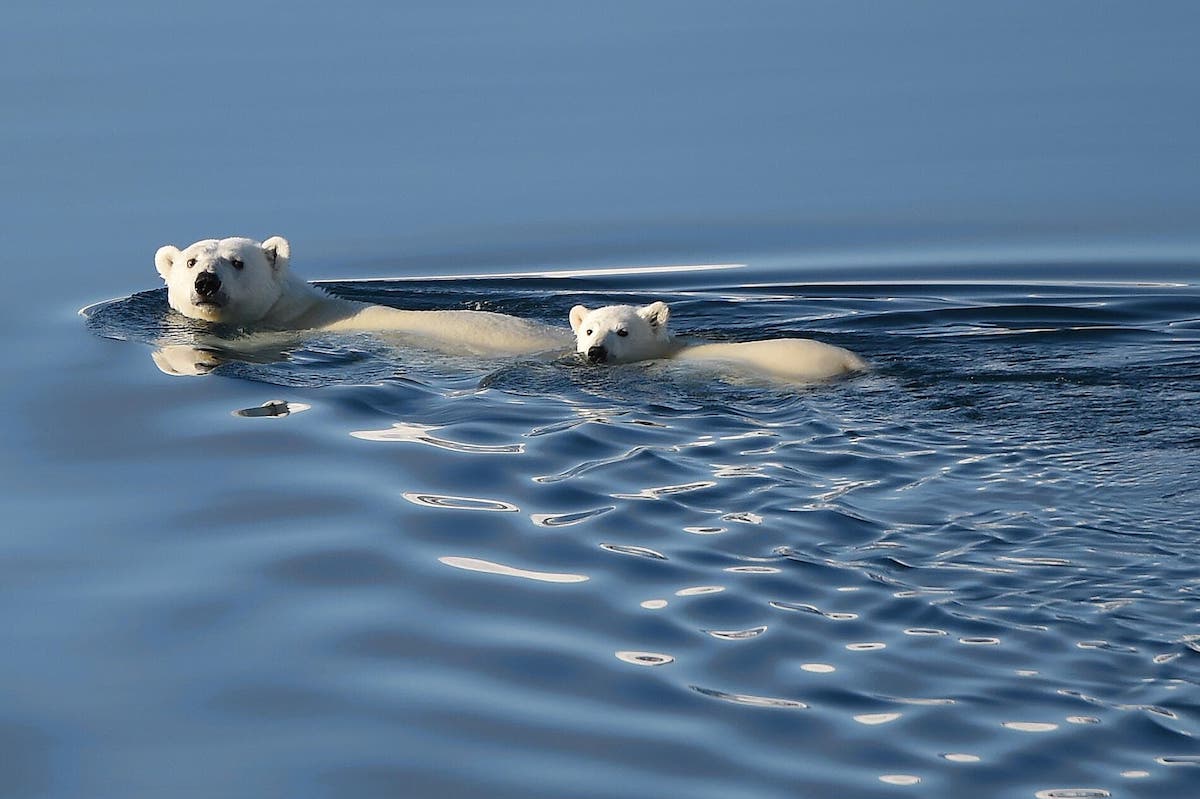
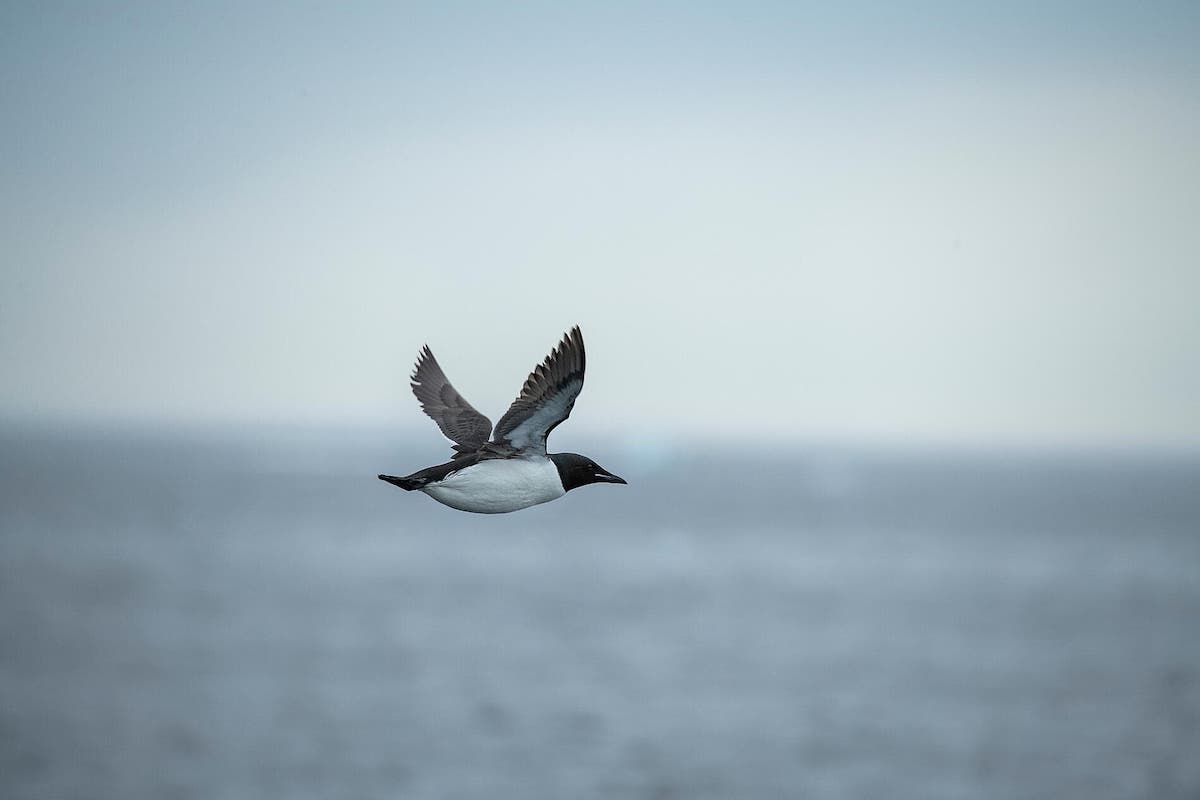
In the north-west of Ungava Bay, in Nunavut, the northernmost Canadian province, Akpatok Island reveals its chiselled coastline. Uninhabited by men, it is occupied by the thick-billed murres for which it was named (Akpat is their name in Inuit). Its cliffs, rising up to 200 metres (656 feet) high, make an ideal nesting environment for these birds. Dominated by a vast limestone plateau, the island is also surrounded by numerous beaches where walruses sun themselves in the summertime. From your inflatable dinghy, if the weather conditions allow it, you might also have the chance to glimpse some polar bears roaming along the cliffs in search of food.
Nachvak Fjord is one of the longest fjords on the north coast of Labrador, stretching out over 20 km (12.4 miles). Steep-sided, it is 2 km (1.2 miles) wide and lined with sheer rock faces. On its western end, its two arms, Tallek and Tasiuyak, form the outlet of glacial valleys with a characteristic U shape. The Torngat Mountains, the highest points of the surrounding relief, are Labrador’s tallest. Nachvak Fjord has always been an important fishing spot for the Inuit of Labrador, and was once the northernmost trading post of the Hudson’s Bay Company. You will be able to admire spectacular views from the ship’s exterior decks, before taking your place aboard an inflatable dinghy to get as close as possible to the coast.
Nain is the northernmost permanent settlement in Newfoundland and Labrador, accessible only by air or by sea. The town was established by Moravian missionaries in 1771 and has been inhabited ever since. It now has a population of around 850, composed mainly of Inuits. Fishing is the main income-generating activity, with hunting and traditional trapping activities resuming in the winter months. Accompanied by your naturalist guides and local guides, you will have the chance to discover daily life in Nain, then set off on a hike in the surrounding hills. There, you will discover a beautiful view of the small wooded valley in which the village lies.
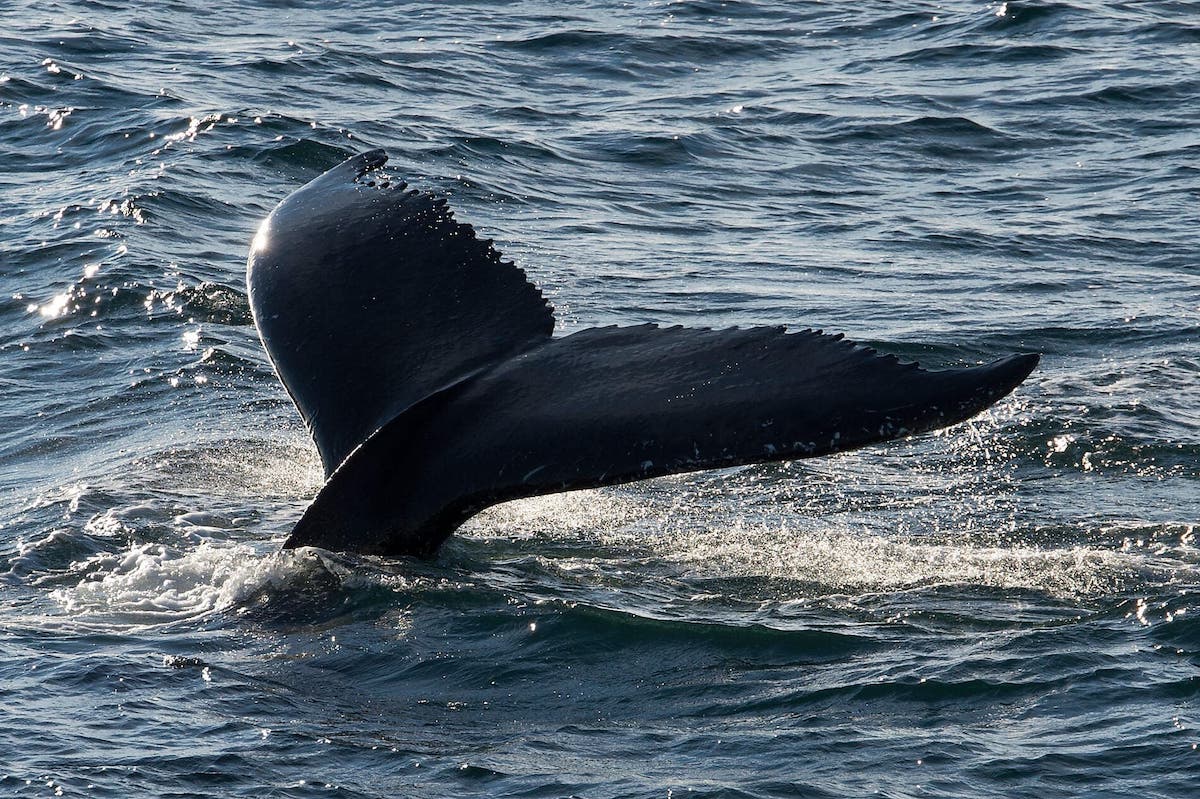
Discover the picturesque community of Rigolet, on the north coast of Labrador. The wooden promenade, looking out onto the spruce forest and the waters of Hamilton Inlet, is one of the longest in the world. The village, located very near to Lake Melville, houses a community of 300 inhabitants who are, in the main part, descendants of the Labrador Inuit and the European traders who came to settle in these parts from the 18th century onwards. During your port of call, you’ll admire the beautiful pieces of local craftsmanship: weaved baskets, mats, sealskin clothing, sculptures… As for wildlife fans, they will not be disappointed, with the possibility of observing whales, as well as seals, orcas, bears, foxes, otters and migratory birds.
A small, authentic village on the southern coast of Labrador, Red Bay immerses you in a unique atmosphere, combining wild nature, a fascinating history, and maritime culture. This UNESCO-listed heritage gem is home to one of the world’s best-preserved Basque whaling sites. Fall under the spell of its serenity and imagine the lives of the whalers of old as you visit its museums or explore the neighbouring Saddle Island, a wind-beaten land of silence, sea spray and traces of the past.
Located at the Northern extremity of the island of Newfoundland, L’Anse aux Meadows is listed as a UNESCO World Heritage Site and is the only site known to have been established by the Vikings in North America. Its ancient vestiges provide the very first traces of European presence in the new world. The remains found on this splendid 11th century Scandinavian archaeological site are identical to those found in Iceland. Aboard your ship, cruise in the wake of those first Vikings who discovered the tip of North America 500 years before Christopher Columbus arrived on the shores of the American continent. A memorable adventure in a setting punctuated with coastal peat bogs, grass and many varieties of shrubs and lichen.
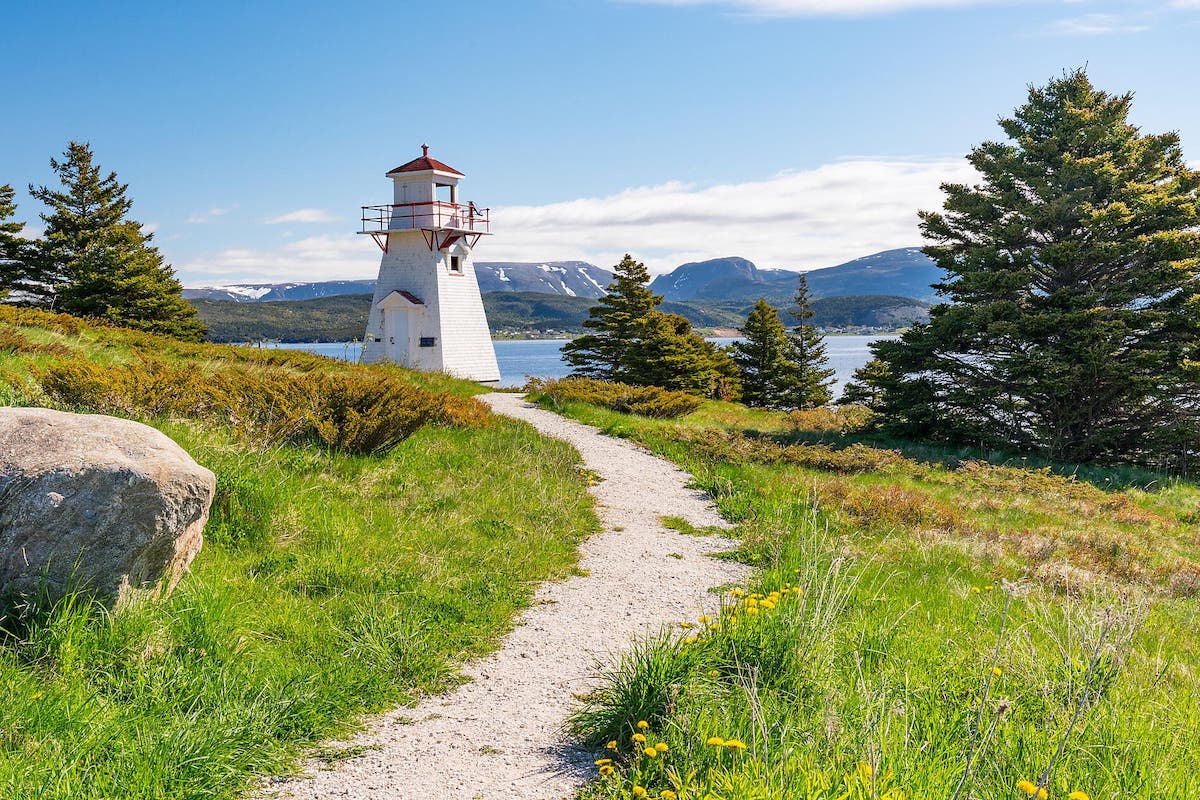
In the azure setting of the Newfoundland coast, Twillingate stands like a rare jewel, with its jagged cliffs embracing the ocean. This picturesque haven, inhabited for over 3,000 years, was once the fiefdom of intrepid fishermen. The municipality now proudly shelters its secular lighthouse, an immutable sentinel facing the Atlantic. In this area, as soon as you arrive on the island, you will make the most of six walking trails in the heart of the famous Rockcut Twillingate Trails, from where you will be able to admire the striking views of local birdlife, unique geological formations and, if you are lucky, majestic northern moose. These itineraries wind their way through wild and preserved nature, providing a complete immersion in a coastal ecosystem featuring rare beauty. For those wishing to enjoy a more contemplative experience, the local museum, the historic lighthouse and the church make for very rich cultural alternatives, enabling visitors to explore the secrets of Twillingate fascinating maritime heritage, which is remarkably concentrated.
In the northern confines of Newfoundland, Trinity Bay unfolds like an aquatic jewel set in the granitic case of the Atlantic coast. Its deep azure waters creep into the crevices of the coastline, creating a maze of fjords and inlets that provide refuge for myriad marine species. The jagged cliffs that overlook it, age-old remnants of glacial erosion, offer a splendid spectacle for the contemplative gaze. This maritime enclave, the cradle of abundant biodiversity, remains an eloquent witness to the untamed magnificence of boreal nature.
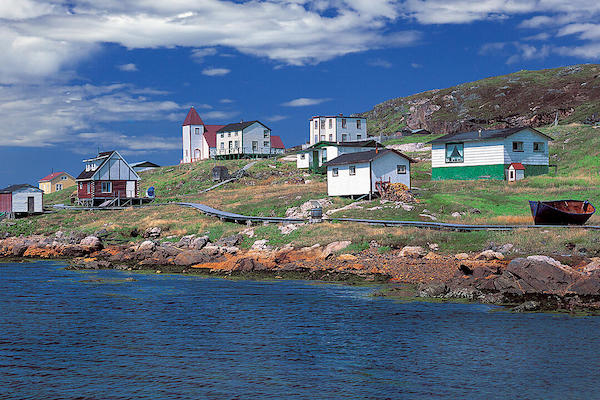
You will be charmed by the small multi-coloured wooden houses hanging to the side of cliffs at the entrance to the bay or edging the small steep streets of the capital of the Canadian province of Newfoundland and Labrador. Their green, blue, red and yellow colours are reminiscent of fishing boats. This quiet little port at the end of the world, the easternmost in North America, became the first English colony founded on American territory in 1497. Protected by the Gulf Stream, the climate here is relatively mild and the natural landscapes are spectacular. You’ll be able to enjoy magnificent panoramas from Signal Hill. It was at the summit of this hill that Guglielmo Marconi received the first transatlantic wireless signal in 1901.
We highly recommend you stay one night in Montreal after this flight.
Inclusions
²Excluding premium à la carte beverages.
Exclusions
Regions
Destinations
Price
Vessel Category
Month
Year
Duration
Sort by
| Cabin | Regular Price | Sale Price |
|---|---|---|
| Deluxe Stateroom | $17,790 | |
| Deluxe Suite | SOLD OUT | |
| Grand Deluxe Suite | SOLD OUT | |
| Grand Privilege Suite | SOLD OUT | |
| Owner's Suite | SOLD OUT | |
| Prestige Stateroom Deck 4 | $19,470 | |
| Prestige Stateroom Deck 5 | $20,310 | |
| Prestige Stateroom Deck 6 | SOLD OUT | |
| Prestige Suite | $37,830 | |
| Privilege Suite | $39,660 | |
| Superior Stateroom | $16,640 | |
| Cabin | Regular Price | Sale Price |
|---|---|---|
| Deluxe Stateroom | $18,110 | |
| Deluxe Suite | $29,720 | |
| Owner's Suite | $62,310 | |
| Prestige Stateroom Deck 4 | $19,890 | |
| Prestige Stateroom Deck 5 | $20,780 | |
| Prestige Stateroom Deck 6 | $21,860 | |
| Prestige Suite Deck 5 | $39,560 | |
| Prestige Suite Deck 6 | $41,530 | |
| Superior Stateroom | $16,850 | |
| Cabin | Regular Price | Sale Price |
|---|---|---|
| Deluxe Stateroom | $16,620 | |
| Deluxe Suite | $26,390 | |
| Grand Deluxe Suite | SOLD OUT | |
| Grand Privilege Suite | SOLD OUT | |
| Owner's Suite | $68,180 | |
| Prestige Stateroom Deck 4 | $18,130 | |
| Prestige Stateroom Deck 5 | $18,870 | |
| Prestige Stateroom Deck 6 | SOLD OUT | |
| Prestige Suite | $34,640 | |
| Privilege Suite | $36,300 | |
| Superior Stateroom | $15,570 | |